Six modules.
One on-set toolkit.
Three hours of focused, working-actor craft. The technical layer drama school skips — taught the way it’s actually used on set.
Each module is short, dense, and built around a single problem you’ll meet on day one of every job. Watch in order, or jump to the section you need before tomorrow’s call sheet.
Visibility
How to be seen by the camera — without performing for it.
The first lesson nobody teaches: the camera is not the audience. It’s a sensor with a focal length, a depth of field, and an opinion about where you should be standing. Knowing how it sees you is the difference between a take that cuts and a take that gets thrown away.
You’ll learn how lens choice changes your performance, why a 50mm needs less than a 24mm, and how to find your light without ever looking for it. By the end of this module the lens stops being a stranger and becomes the most important member of your scene.
- Lens basics every actor should know — wide, normal, telephoto.
- Finding your light without breaking eyeline.
- Adjusting performance scale to lens choice.
- Working with focus pullers — what makes you easy to shoot.
Move To Camera
Hit your mark without looking down. Land it, every take.
“Hit your mark” sounds simple. On a busy set, with three cameras rolling and a focus puller waiting on you, it isn’t. Every actor who’s ever delivered a flawless take has a system for getting their feet to a precise spot without ever breaking eyeline.
This module gives you that system. You’ll walk away with three reliable techniques — peripheral, kinaesthetic, and rhythmic — and the judgement to know which one fits the scene.
- The three professional methods of finding a mark blind.
- How to “land” softly on a beat without overshooting.
- Working with multiple marks in a single take.
- Adjusting blocking on the fly when the director re-frames.
Prop Handling
Cigarettes, glasses, phones, weapons. The objects that ruin takes.
A lit cigarette is a continuity problem. A wine glass is a focus problem. A phone is an eyeline problem. Props are where the technical demands of acting for camera become physical, and where the difference between a working actor and a struggling one shows up fastest.
You’ll learn how to handle props so they support your performance instead of fighting it — and so the script supervisor doesn’t flag your every take.
- Continuity-safe handling — matching your own moves take to take.
- Drinking, eating, smoking, writing — the four most common traps.
- Phones, weapons, and stunt props: what’s safe to improvise.
- How to ask for a reset without slowing the day.
Sound
Act fully without giving the sound recordist a headache.
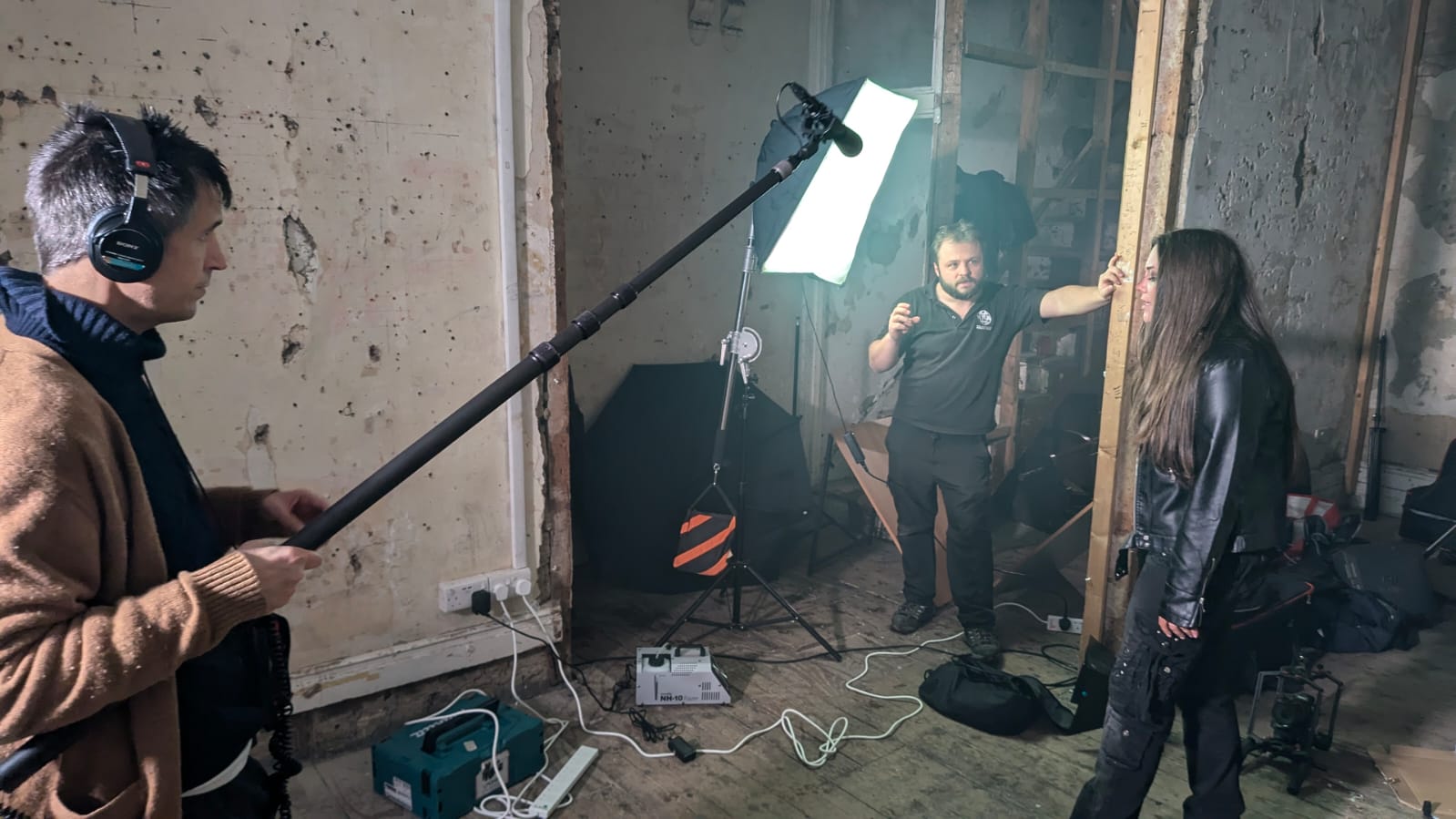
Drama school teaches projection. Set teaches restraint. The microphone is closer than you think, and almost every “noisy” actor — clinking jewellery, scraping chairs, popping plosives — is one boom op away from being asked to come back for ADR.
This module covers the small physical adjustments that keep you on the dialogue track and off the do-over list.
- Microphone awareness — boom, lav, plant.
- Movement and clothing noise: what to fix in the wardrobe truck.
- Plosives, sibilance, and breath control on close mics.
- Overlap and interruption — when, and how, you can.
Film Set As A Work Environment
Etiquette, lingo, crew dynamics — the hidden curriculum.
Every set has unwritten rules. What “first team” means. What “going again for sound” means for you. Why the 1st AD’s tone is law. Where you can and can’t stand. Who calls “lunch.” Why nobody touches the camera.
The longest module in the course, and the one most students rewatch the night before a job. It’s the playbook.
- The chain of command — and how to read it in five minutes.
- Crew vocabulary every actor should understand.
- What “stand-in,” “second team,” and “checking the gate” actually mean.
- Trailer, holding, base camp — where to be, when.
- How to be the actor crews like working with.
Quick Tips
The little things that get you noticed — and remembered.
Twenty short, specific tips Peter has collected over twenty years. Things directors notice. Things ADs appreciate. Things that turn a one-day booking into a re-call.
Watch this module before any first day on a new set. It’s the kind of distilled, practical wisdom no drama school syllabus has room for.
- Twenty field-tested tips for first days, big sets, and night shoots.
- What to do when something goes wrong on your take.
- The two questions that always make you look prepared.
- One habit that gets you re-booked.